2027 Workshops
Program Workshops Support & Exhibits Hotel & Travel Explore Montréal Make the Case to Attend
Program Workshops Support & Exhibits Hotel & Travel Explore Montréal Make the Case to Attend
Join us for hands-on Workshops to kick off your SACME 2027 experience!
May 2, 2027 - 9:00 - 11:00 AM
 What Could Possibly Go Wrong? AI Ethics in CPD Practice
A Practical Workshop on Ethical Decision-Making, Failure, and Responsible AI Use in Continuing Professional Development
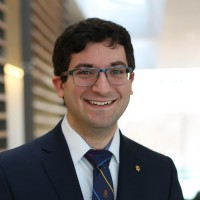
Presented by: Eleftherios (Terry) Soleas
Eleftherios Soleas, PhD
Dr. Eleftherios Soleas is the Director of Lifelong Learning and Innovation at Queen’s Health Sciences in the Office of Professional Development and Educational Scholarship as well as adjunct faculty in health sciences and education. Terry is a mixed-methodology researcher with a focus on integration of qualitative and quantitative data sources using the lenses of motivation psychology and learning theories to provide effective and efficient education and care. He is the inaugural Special Advisor to the Provost on Generative AI, where his principal mandate includes ensuring that AI tools augment the achievements and work-lives of Queen’s personnel. He teaches a variety of collaborative practice courses and is a principal accreditor of health professions learning at Queen’s. He has built or contributed over 200 unique educational programs providing learning to over forty-thousand learners and counting. He also serves on university and national committees lending his educational, psychological, and accreditation perspectives. Terry enjoys, in no particular order, trying to be funny, teaching, baked goods, lost causes, and relatedly watching the Toronto Maple Leafs.

HyFlex from Design to Practice: Lessons Learned and Cognitive Presence
Presented by: Sophia Valanci and Heather MacNeill
How do we move beyond participation toward meaningful learning and practice change in HyFlex environments? In this capstone workshop, participants will revisit the case from the previous sessions and examine how cognitive presence supports inquiry, reflection, and application in professional learning.
Drawing on participant experiences and lessons learned throughout the series, the group will explore practical approaches to designing activities that move learners from discussion to action. Participants will also synthesize insights from social presence, teaching presence, and technology planning to develop a comprehensive approach to HyFlex CPD design.
Sofia Valanci, MD, PhD, CPC (HC)
Sofia Valanci is a strategic advisor helping educators, healthcare professionals, and CPD organizations integrate emerging technologies into teaching, learning, and lifelong professional development. She brings this work into practice as Clinical Director of Strategic Innovations at University of British Columbia CPD.
Heather MacNeill, MD, MScCH(HPTE), FRCPC
Heather MacNeill is Assistant Dean, Clinical Faculty Development, for the Toronto Metropolitan University School of Medicine (TMU SoM) and Professor at University of Toronto. She is a practicing PM&R physician and Medical Director of Stroke Rehabilitation at Sinai Health. She has been teaching about, creating, and researching the effect of educational technologies in healthcare for over a decade.

 Think, Decide, Compare: Developing Clinical Judgment and Professionalism Through Learning-by-Concordance
Presented by: Haifa Akremi and Nicolas Fernandez
This workshop is designed to introduce participants to an educational approach for situations that involve uncertainty, interpretation, and judgment rather than a single, unequivocably correct answer, Learning-by-Concordance (LbC). Learners respond to questions based on authentic clinical situations and then compare their responses with those of a panel of experts. Participants will have the opportunity to work in small groups to develop an authentic clinical situation, formulate an initial hypothesis/option, and introduce supplementary information that requires the learner to reconsider it. Each participant will identify a situation that could become an LbC module and the next step needed to develop it.
Haifa Akremi, PhD, is a Postdoctoral Research Fellow in Medical Education in the Department of Family Medicine and Emergency Medicine and leads the Continuing Professional Development (CPD) research program at the Faculty of Medicine, Université de Montréal. She holds a PhD in Rehabilitation Sciences from Université de Montréal and a master’s degree in Health Sciences from Université de Sherbrooke. Her research focuses on evaluating educational activities and programs and understanding professional practice change. Her expertise also includes learning by concordance and the collaborative design of educational activities with healthcare professionals.
Nicolas Fernandez is an Associate Professor in the Department of Family Medicine and Emergency Medicine and a researcher at the Centre de recherche en pédagogie de la santé (CRPS) at the Université de Montréal. His research focuses on experiential knowledge and the design and evaluation of Learning-by-Concordance (LbC). His publications, drawing on research funded by the Social Sciences and Humanities Research Council of Canada, examine the design of LbC modules for continuing education in the health professions.
May 2, 2027 - 1:00 - 3:00 PM
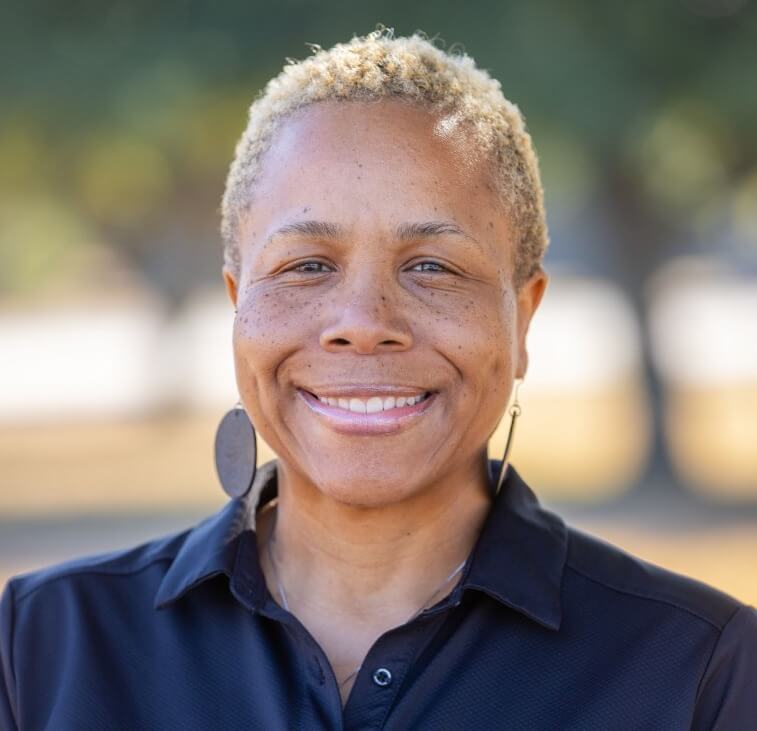
Welcome to SACME: Your Passport to People, Possibilities & Professional Growth
Presented by: Adrienne Ross
A ‘SACME Passport’ will serve as an interactive guide throughout the workshop. Participants will use it to capture key resources, identify people they want to meet, explore committees and engagement opportunities, and develop a personalized action plan for making the most of both the Annual Meeting and their SACME membership.
Adrienne C. Ross, MEd, CHCP
Adrienne C. Ross, MEd, CHCP, is the Accreditation Director for Continuous Learning and Professional Development at the University of South Carolina–Prisma Health. With over a decade of experience in continuing medical education and continuing professional development, she provides leadership in accreditation, strategic planning, educational strategy, and the development of high-quality continuing education for healthcare professionals.
Adrienne is an active member of the Society for Academic Continuing Medical Education (SACME), where she has served in several leadership and committee roles. She is passionate about building connections and creating meaningful opportunities for professionals to engage within the CPD community, learn from one another, and grow both personally and professionally. She believes that strong professional communities are built through collaboration, shared learning, mentorship, and opportunities that help individuals discover new ways to contribute, lead, and advance the field of CPD.

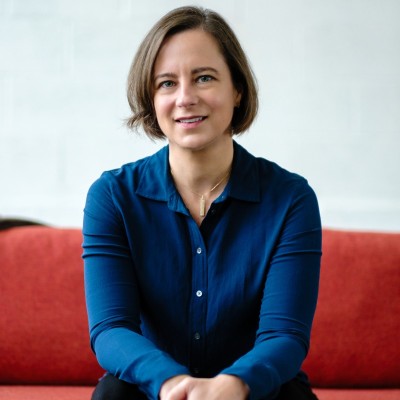
Method to the Mystery: Scoping Reviews for the Investigative Mind
Presented by: Jessica Walter and Martin Tremblay
Every scoping review begins the same way a great detective story does: with a question no one has fully answered, a scattered trail of clues, and the promise that something meaningful is waiting to be uncovered. In this hands-on, two-hour workshop, you won't just learn about scoping reviews - you'll step into the role of investigator and work through a case from the first lead to the final report.
At the heart of this session is an escape-room investigation. Working together in teams, you'll move through a series of locked stages, each one anchored to a core step of the scoping review process and grounded in the field's foundational frameworks. To advance, you'll need to crack each stage: framing a searchable question, defining who and what belongs in the investigation, following the evidence trail, and charting your findings so the full picture comes into focus. Short, focused mini briefings before each stage provide you with the tools to solve the next puzzle, and a closing debrief ties the clues together into a method you can take back to your own work.
Whether you're an administrator or a new researcher finding your scoping review footing, or a seasoned investigator adding a new method to your kit, this workshop meets you where you are. No prior experience with scoping reviews is needed—just curiosity and a willingness to follow the evidence.
Jessica L. Walter, EdD, MA
Jessica is an associate professor at OHSU, School of Medicine, Division of Management, where she teaches graduate courses in healthcare administration and management to mid-career professionals. As someone who has enjoyed puzzles, games, and stories from an early age, she weaves playful activities into learning spaces and almost anywhere else she can. She currently serves as SACME's Scholarship Chair. In her free time, you will most likely find her with her dog, either hiking, knitting, or making books.
Martin Tremblay, PhD
Martin Tremblay is a Senior Research and Innovation Advisor at the Fédération des médecins spécialistes du Québec (FMSQ), where he advances continuing professional development (CPD) initiatives and serves as the primary liaison with the organization’s 36 affiliated medical specialty associations. He has held several leadership positions within SACME and currently serves as its Vice President. A lifelong board game aficionado, Martin has an interest in the application of game-based learning in CPD. Outside of his professional activities, he is a dedicated food enthusiast who enjoys discovering new culinary experiences, spending quality time with his three children, and continually improving his tennis game.
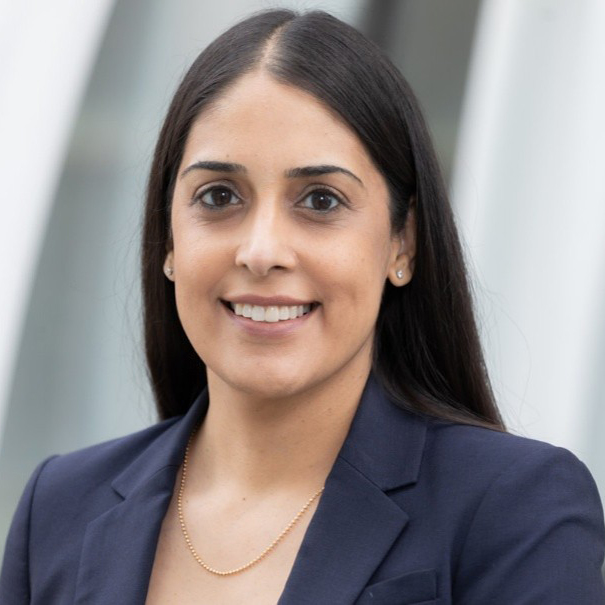
Bringing Your True Colours to Authentic CPD Leadership
Presented by: Latika Nirula
How can greater self-awareness help you become a more authentic and effective CPD leader? Join us for an engaging and interactive workshop using the InsightsTM Discovery colour energies framework to explore your leadership style, understand how your preferences impact others, and strengthen communication and connection with colleagues.
Whether you’re an experienced CPD leader or new in your leadership journey, come ready to explore with curiosity your leadership strengths, gain awareness of how this shows up in your work in CPD, and expand your impact as an authentic CPD leader.
Discover your colours. Embrace your strengths. Lead authentically.
Latika Nirula, PhD
Dr. Latika Nirula is the Director of the Centre for Faculty Development (CFD) at the Temerty Faculty of Medicine, at the University of Toronto. She is a passionate teacher, researcher, coach and faculty developer, who has held several education leadership roles across the academic health system. Her contributions span the areas of faculty development, simulation, digital learning, program evaluation, coaching, and curriculum development. She has a deep interest and research program exploring how coaching and the use of performance data can enhance teaching in the academic health sciences, especially for those developing their identities as teachers across a variety of teaching practice contexts and disciplines. Latika has also studied the role of patient and family storytelling in healthcare education spaces. Of note, Latika leads a program at her Centre that provides 1-to-1 coaching to enhance the teaching performance of faculty and has created a community of practice for others similarly committed to advancing this practice within the academic health system. Latika was recently named the 2026 Recipient of the AFMC Award for Outstanding Contributions to Faculty Development in Canada.